Submission

Posted by Christine Burrows

happiness image #2 Christine

Let’s break it down. Sub= below. Mission = calling, duty. To put oneself below or under the calling or duty which one answers.

Huh? Not words or concepts that resonate in today’s culture. In fact, they seem rather contrary to the contemporary spirit of individualism, independence, and self-promotion. How do we begin to discuss submitting to God or our spouse, when the concept of submission isn’t one most of us often consider? I started with a surrender…

Several years ago, I read Surrendering to Motherhood:  Losing your Mind, Finding Your Soul, by Iris Krasnow.  Krasnow was a journalist with 4 boys under the age of 4 when Ethel Kennedy finally returned her call for an interview. She was hip deep in little boy issues, and simultaneously trying to focus on conducting the interview.  It was bad timing, to say the least. Finally, Ethel said, “You go do what’s important,” and hung up on her.  Iris was devastated, but went on to describe this incident as a catalyst for her surrendering to her calling as mother.

I understood her conundrum. I had 4 kids under 7 at the time, and was doing some balancing of my own – unwilling to surrender one vocation for another.  Krasnow’s story made me smile, and I wondered who would need to hang up on me to give me the push to prioritize my callings, and to do so without resentment.

My own surrender was just beginning.

Flash forward to my first exposure to Theology of the Body. I’m pretty sure I was pregnant with our third child when I first heard a woman give a talk at a retreat about Theology of the Body.  I definitely didn’t get it.  Even though I was a “practicing” Catholic, I had never heard anyone bring God into the marital embrace like this woman did. I thought I was doing well by being a faithful wife, and being willing to have more than 2 babies, albeit on our schedule.  While I may have been surrendering to my vocation of motherhood, I wasn’t all that keen on the idea of submission. I’d say at that point, I was a controlled submissive.  I controlled when and how I submitted to God’s will in our marriage.

Thank God for women like my sister who desired more knowledge and were bold enough to want to share what they learned.  These true evangelists are responsible for spreading the beautiful messages of Theology of the Body my way.  As I learned more, I became more inspired to share, and more submissive to God. It radically changed the way I viewed my husband, my vocation as a mother, our family, my call to evangelization, and my love for our faith.happiness image Christine

Through the grace of God and the courage of these evangelists, I slowly found peace in submitting to God’s plan for me and my marriage.  How many children we have, where we end up living, how much income we generate, how we manage challenges like illness and financial stress, etc. – all managed by peacefully surrendering to God and trusting in his divine providence.

This week I heard a news update about how fewer people are marrying. The analyst spoke about how fewer men want to marry, and perhaps that’s because women have become more aggressive (their words, not mine). Something in this story made me think about that reluctance to submissiveness that we as a culture have. Rather, we have a stronger drive for independence and self-determination. Yet, if we could pause to think about WHO we are submitting to, and from whom we are asserting our independence, this might change. If we openly submit to God, we would desire to enter into the most sacred union God has created for us – marriage.

Surrendering, submitting, and accepting God’s will.  It’s so incredibly humbling!  But in that humility, there is grace and joy.  I strongly encourage all of us to give it a try by taking baby steps in our marriages.  Seek a moment in prayer to ask God for His will in your relationship, and see where that selflessness takes you and your spouse.

The Four Major Hurdles to Marital Happiness, Part Two

Our previous post explored the challenges that children bring to a marriage, and some of the financial implications of living together as husband and wife.  This second piece focuses on two other subjects that married couples need to resolve lovingly, those being sex and the equitable sharing of household tasks.

About Sex

The Church’s teachings on sex and intimacy in marriage have evolved greatly over the past 25 years.  Historically, it was one of those things Catholics just didn’t talk about, as you could even get in trouble talking about it in some places, such as parochial schools.

Since the publication of Theology of the Body and the books that discuss it—The Good News About Sex and Marriage being first and foremost—there are many Catholic resources out there for couples seeking both physical and emotional intimacy in the marital bed. 

The Love’s Sacred Embrace retreats at Our Lady of Mt. Carmel are centered on Theology of the Body, on connecting the physical and spiritual aspects of our marriages with Christ’s marriage to His Church.  If we ignore the spiritual side of our marriage, it’s easy to get caught up in the secular elements—the ones that come at you in the hundreds—that put a serious strain on relationships.

There will be plenty more posts on the topic of sex within sacramental marriage.  For now, let us simply acknowledge that our physical relationship with our spouse is a gift from God, an integral part of sacramental marriage.  As Catholics, we are called to celebrate our marriages—to our spouse, and as part of the Body of Christ—fully in both their spiritual and human aspects.

Last word on this subject—it’s okay to have sex with your spouse.  In fact, it’s VERY okay.  It is a living re-presentation of your marriage vows.  And do you even KNOW what The Touch of Eden is?  You’ll have to attend a retreat at OLMC to find out! 

About the Division of Labor

The commentary on the Mass two weeks ago addressed an idea that has been floating around in my head for awhile, but one that I’ve never been able to adequately express.  It is the Servant-Leader, and its importance was immediately visible to me as regards marriage enrichment.

Clearly, the commentary was focused on Jesus as the ultimate Servant-Leader, the savior who came to earth not to be served, but to serve.  This model, of service to the ones we love, is a perfect template for bringing harmony to our marriages.

The Division of Labor argument typically finds both spouses feeling put upon and unappreciated for all they do, and usually provokes some form of hostility.  In the background of this argument is the suggestion that neither spouse wants to do a heckuva lot more than what they’re already doing to keep the wheels on.  It is this orientation, which is completely human and understandable, that must be re-examined in order for couples to escape repeated instances of this dispute.

As with most things Christian, the answer is paradoxical.  The answer is to seek opportunities to serve your spouse, above and beyond the call, so to speak.  Volunteer to take early duty with the kids on both Saturday and Sunday one weekend.  Play checkers with his dad while he goes to a pub on Sunday to watch the Colts.  Come home early and make dinner for her book club.

Jesus was the model of the Servant-Leader, and we as husbands and wives are called to serve one another.  The side effect, of course, is that both spouses are happier, and a cycle of service can help these small acts of service become a way of life.  One that works both ways.  Not-so-random acts of kindness that anticipate needs and are offered up without being asked.  Leaning into one another, in small ways, rather than leaning away.

For those with too much to do, the answer is to seek one’s partner, and volunteer to do more.  Negotiate where the time will come from.  Seek “Acknowledgement, Acceptance and Appreciation” for your efforts.  Enlist the help of The Holy Spirit.  Your spouse will usually reciprocate, and offer to help you in some way, almost always without being asked.  Repeat, and repeat again.  Release the power of your faith.  Give it up, and see if The Holy Spirit doesn’t lighten your load.

Summary

If you and your spouse are spending a great deal of your time arguing, it may be that you could benefit from some coaching in some common areas of discord. The marriage enrichment ministry at Our Lady of Mt. Carmel wishes to be a resource to help improve your marriage.  Our bi-annual retreats and monthly Marriage on Tap events are great places to meet other Catholic couples with similar concerns and an interest in creating an environment that supports marriage in our community.

* * * * *

If things in your marriage have moved too far along for the kind of informal support we provide in this ministry, we recommend you seek help from Third Option, a Catholic support group for marriages in trouble.

The Four Major Hurdles to Marital Happiness, Part One

For most couples married any length of time, it’s not unusual to have disagreements or fights.  We’ve been told and taught for centuries that God’s plan for humanity is that women and men will seek and find completeness in one another, that the various parts weren’t designed by accident, and so forth. Doesn’t mean we aren’t going to have fights.

Regardless of where you stand in this search, the fact that spouses fight is not terribly important.  HOW we fight IS important, and there are scores of books on that subject.  Suffice it to say for this moment that there IS such a thing as fighting fair, and that learning how is one of the important early lessons in young marriages.  Learning to avoid John Gottman’s Four Horses of the Apocalypse—criticism, contempt, defensiveness and stonewalling—is a good place to start.

My view, again, is that regardless of how frequently or how actively couples fight, they tend NOT to fight about a dozen different subjects.  They tend to have the same fight, again and again.  It may come in different disguises, with different backdrops, but it’s typically the same fight.  And, unless I miss my bet, the root cause falls into one of four categories:

Children

Money

Sex

Division of Labor 

These, I believe, are the big issues, the potential deal-breakers, the stumbling blocks that keep many couples from thriving through the difficult first decade of marriage and children.   Within sacramental marriage, then, how are we to deal with these issues in a successful way, i.e., one that keeps us connected spiritually, physically and emotionally with our spouse in a world that moves at light speed?

This post will focus on the first two.  The next post will look at the last two, and offer some final thoughts.

Children

The decision to have children is perhaps the largest question we as humans face as we enter adulthood.  Having kids changes everything, is twice as hard as you expect, twice as expensive, and infinitely more rewarding.  Until and unless a couple is on the same page concerning whether to have children, when, how many, etc., they are setting themselves up for difficulty down the road.  Couples who get married with the intention of finding common ground on this subject at some later date may find it impossible.  Too, the notion that having a child, or another child, is the prescription for a troubled marriage is bad reasoning.

Children will test your marriage in fairly direct proportion to their eventual number.  Couples determined to survive and enjoy these years will usually reap immeasurable rewards in their later years.  As my wife points out in the discussion over religious freedom and healthcare, being pregnant is not a disease.  But the commitment, in terms of things foregone, pleasures deferred, lifestyles altered, is critical.  We believe it is not our choice as to whether or when God chooses to bless our lives with children, but within sacramental marriage we hope that the husband and wife understand relevant scripture, as well as their own feelings on these issues, and respect the feelings of their spouse.

Money

Money has been called the root of all evil, and it is certainly at the heart of a lot of marital discord.  For many of us, money has become our god, and we consume ourselves in its pursuit.  Recognizing this in ourselves and agreeing on how to handle money before getting married will head off many troubles in the years afterward.  Not all, but many.

Nancy and I struggled financially for years, raising three children while I pursued what would kindly be characterized as a lackluster career.  I was on straight commission for 20 years, and my income, in addition to being insufficient, was unpredictable.  I put off Nancy’s entreaties to make and live on a budget literally for decades.  During those years, I wasted a lot of time worrying about money, and I expect someday to be held accountable for all of that wasted time.

OLMC offers several financial workshops, as well as a host of books on the topic in the church library.  If you and your spouse are arguing over money all the time, it couldn’t hurt to sign up for a workshop—together—and start working this thing out. Nancy and I have been on a fairly rigorous budget now for roughly three years, and it has improved our marriage.  The process of making the budget and then living (more or less) within it, for me, has been virtually painless.  And to think I resisted for 25 years.

One more thing about money.  Make sure there is a Charitable Giving line in your budget, and remember Jesus’ words in St. Matthew’s gospel about first fruits.

Next time, we’ll examine the topics of Sex and The Division of Labor.

What We Mean by “Sacred Embrace”

Posted by Christine Burrows

Contrary to popular belief, modern Catholics do not think of sex as bad, shameful, or sinful. In its proper context, Catholics love sex, so much that we regard it as sacred. Ours is a counter-cultural faith, and this is Exhibit A.  For those of you unfamiliar with The Theology of the Body, this is a brief primer to whet your appetite.

It may help to begin by stating clearly what Theology of the Body is NOT.  It is not about the casual, recreational, self-focused sexual encounters portrayed in contemporary media.  It is not about the objectification of women that fuels the pornography industry.  It is not about “scoring”, “getting off” or any of the other vulgar measures of our cultural self-degradation.

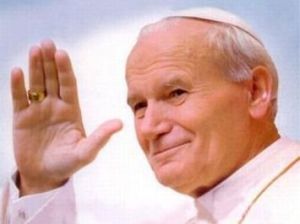
The Theology of the Body is the fundamental Catholic teaching on human sexuality, borne of the writings of Pope John Paul II.  The Pope began this work in 1979 and devoted five years of his pontificate to helping us understand God’s word as it relates to sex within sacramental marriage between a man and a woman.  Few Catholics are aware of it or can claim to any real understanding of it. (Not surprisingly, even fewer people outside the church have even heard of it.)  Which is a shame, because it is a beautiful, intensely intimate portrait of what God intended for us before The Fall.

  • Christopher West is a contemporary expert on Theology of the Body, having spent years unpacking it and presenting it in everyday English to those of us who don’t have the time or talent to fully understand John Paul II’s words.  Check out his videos and books at www.christopherwest.com
  • At the core of Theology of the Body is the truth that God gave men and women complementary bodies, and that “our bodies tell a story, the most beautiful story imaginable.” (Christopher West). Our bodies are uniquely designed and have special characteristics which give us the ability to unite physically and to procreate.
  • A second important premise to Theology of the Body is that we are all searching, longing for something. As Catholics, we believe this longing is to understand and embrace our God-given purpose: to know, love and serve God on Earth and to live happily with him forever in Heaven.
  • When we put together these two basic premises, we see that sex (so intimate, intense, and with the miraculous potential for new life) may actually be a way to quench that longing. The problem with lots of the sex that’s happening today is that it’s distorted, selfish, and incomplete – and has little to do with living out our purpose on Earth. It may satisfy a physical longing, but it doesn’t come close to satisfying our deepest longing to know, love and serve God.
  • Theology of the Body teaches us that sexual intercourse (the marital embrace) is a unifying act between a man, a woman AND God. It is an act of faith, open to God’s will and intervention. Not simply an opportunity to feel good in one another’s physical company, nor the means to getting pregnant. It is a sacred bond that gives us a glimpse of heaven, the uniting of our bodies in accordance with God’s word and his plan for us. It requires trust, submission, the love of one another and the love of God. It is a spiritual encounter of the highest order.

WOW!! That’s heavy stuff, and truly just a teaser. There’s more, much more. Stay tuned here, and dig deeper elsewhere. I dare say that once you “get” Theology of the Body, you will begin to change your entire worldview.  Moral issues will become clearer. Relationships will become more important. And selflessness will become a daily goal. Just imagine if… when… we ALL get it!

Can I have an “AMEN!”

Where is the Love?

I remember a guy I knew in college (in the mid ’80s) saying very cavalierly that the last thing he thought about when he was having sex was love. At this time, the sexual revolution was in full swing: The Pill was more common than a multi-vitamin and virginity was becoming a derogatory term. Women were encouraged to be assertive and open with their sexuality. And men were enjoying readily available sexual encounters.

What happened to the love and sex connection?

My thought is that the connection between love and sex was more frequently present before the sexual revolution (and the increased availability of contraception) mostly because there was vulnerability and risk involved in having sex with someone. Birth control minimized this risk, and enabled men and women to hook up without the worry of getting pregnant – or without the openness to it. But, did the vulnerability really disappear? Isn’t being naked in the presence of another a vulnerable experience? Doesn’t working out the awkwardness of sexual intimacy involve being vulnerable? What about communicating about fears, desires, and anxieties? Sadly, these feelings have been dismissed in the name of “free sex”. Often couples enter into sexual relations without ever communicating about these feelings and concerns – and without feeling love – because they CAN. By that, I mean that they can because they don’t have to worry about getting pregnant (even if they do still have to worry about other things such as STDs and simple awkwardness.). What happens then is that all those feelings go untended, and the sex can be more alienating than unifying.

Sacramental marriage reconnects sex and love. It reserves sexual intercourse to marriage, and calls couples to be open, vulnerable, and submissive to one another and to God. This kind of trust in God’s plan involves an intimacy that requires deep, open love. These couples who are open to God’s plan for their marriage don’t fret about risks and vulnerability because they trust God.  While love for another can exist outside of marriage, the fullness of marital love can only be realized when husbands and wives consummate their marriage with openness to life.

As the sexual revolution devolves into commonplace, we need a counter-revolution to restore the relationship between sex and love. I say we start one marriage at a time. Are you with me?

Posted by Christine Burrows


Marriage: What’s God got to do with it?

Contributed by Christine Burrows.

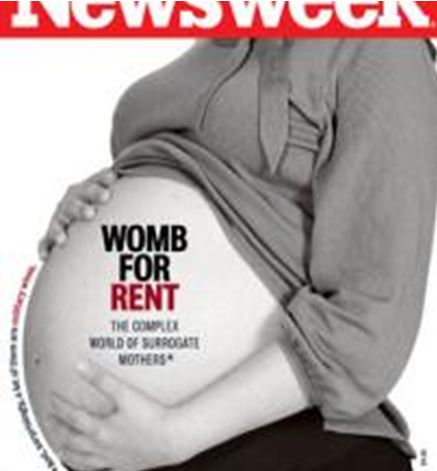
Last night Peter (husband) and I were flipping channels and landed on a sit-com called The New Normal.  We caught the last ten minutes of it which culminated in one of the lead characters (a male) proposing marriage to his (male) partner in a candlelit room while the surrogate mother carrying a child for them was hooked to a sonogram device – so that their baby could witness the engagement.

Before I comment further, let me say that watching this scene reminded me of a very real situation of a close college friend of mine. About eight years ago, her brother-in-law asked her husband to provide sperm so that he could become a father. The brother-in-law paid both an egg donor and a surrogate, and wanted to use his brother’s sperm so that he could make a child that was closely related to him through DNA. Since then, my friend’s brother-in-law has made four children, using his brother’s sperm and the sperm of his partner, donated eggs from different women, and rented wombs from other women.

Both of these situations – in TV Land and in the Real World – seem so far removed from what God had in mind for us in the sacrament of marriage. It saddens me to think of all the hoops people will jump through in their pursuit of the “right” to parenthood. It saddens me just as much when I think about how many other people are being used so that these men (but it could be anyone) can call themselves “married” and “parent”. Two thoughts on this:

  1. The gifts of our spouse and our children are truly gifts from God, and therefore holy. Holiness can’t be bought, designed, or manufactured. It has to be sought through relationship with God, and this requires submissiveness to God’s will. Homosexual partners who believe they want marriage can’t be fully submissive to God because their sexual union doesn’t have the capacity for life.
  2. When we forget about marriage and parenthood as reflections of God’s love, we think we can manipulate people and situations to earn titles and roles. While there may be love and good intentions at the heart of these pursuits, there is no submission to God’s will. And, I dare say, there’s no seeking holiness.

So that I don’t end on a soapbox, let me give a few shout-outs to some married holiness-seekers:

  • Let’s give it up to Sarah and Gary for submitting to God’s will to welcome another little Galvin to the world!
  • What about that McGonigal clan for generations of submission and holiness-seeking through marriage and family-building!
  • And to all that have answered the call to holiness through true, unselfish partnership in marriage, I pray for you because I know its sacrificial and difficult at times. Stay the course! It’s making God so happy and He’s got great things in store for you because you’ve answered His call.

Three Weddings, …

Aside

Three Weddings, a Funeral and a Banquet

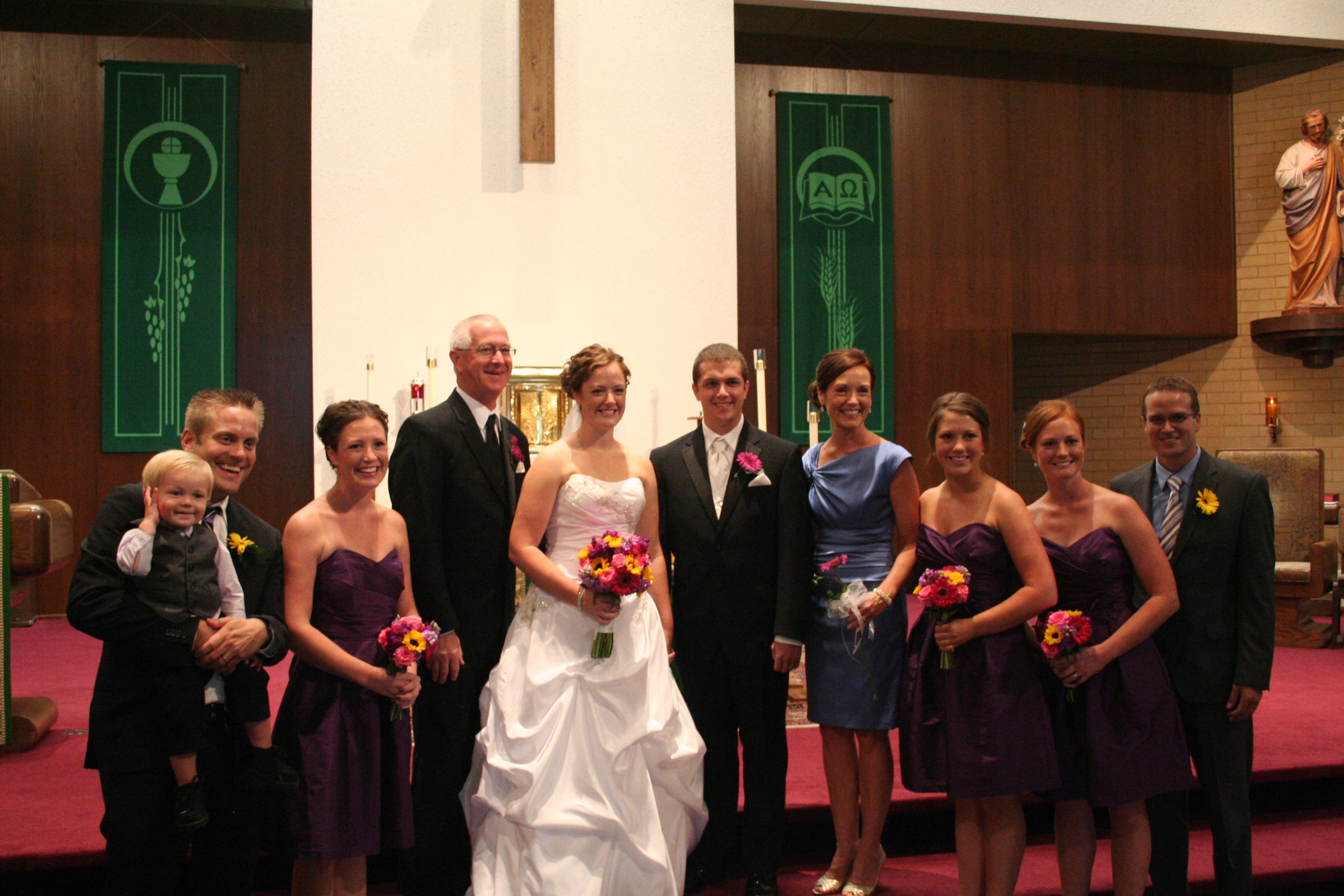
Just over five weeks ago, I witnessed a small slice of Heaven when my third daughter was married at St. Matthew’s Catholic Church.  Three of my four daughters have now received the Sacrament of Marriage, and my wife Denise, our families and friends have all experienced three special insights into Heaven-the eternal banquet, the eternal wedding feast!  And my three daughter and their husbands now share in a special fraternity-millions of couples united with Christ in a covenantal marriage.

Image

Today marks the 60 anniversary of my parents wedding.  Sadly, however, my mom passed away on September 22nd, just 12 days shy of this tremendous accomplishment.  But I believe that the glimpse of heaven she had on October 4, 1952 is now within her grasp-she has become part of that banquet.  And I am proud of her and my father for living out this sacrament for 60 years, through five children and all the responsibilities of their care and upbringing.

Denise and I have been married for over 33 years, have four children, three sons-in-law, and one fantastic grandchild.  We continue to marvel about all the blessings we have received these 33 years, blessings that far outweigh the occasional sorrows.  And we continue to believe that the daily grace we receive from the Sacrament of Marriage constantly nourishes our relationship with each other, with our family and friends, and with our faith.

My hope for this blog is that, coupled with the one-day retreats that we offer at Our Lady of Mt. Carmel, and the continuing education for married couples planned for our parish, that every couple reaches and exceeds that milestone that my parents missed by only 12 days.  And that ultimately the brief snapshot of Heaven we received on our wedding day becomes a panoramic reality for us when we sit down at the heavenly banquet promised to us.

Peace to all of you!

Joe McGonigal