
© Bruce Allen October 10, 2018
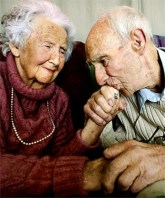
Relationships, over time, seem to become burnished, the colors changed and smoothed off around the edges. It is the evolving nature of the marriage relationship itself over time which produces this new appearance, this patina of age. It is accompanied at times by some sense of loss, but, in the best cases, maintains acceptance, understanding, kindness and friendship. It is what happens over 40 or 50 years, as lust grows into love which grows into commitment which grows into devotion. It is, in fact, something of a best-case solution to this whole marriage thing; it is rare—perhaps 3-4% of marriages get to the devotion stage—and therefore I consider it valuable. As is the sacrament that produced it and the foundational love that lives on.
A husband like me, whose go-to behavior (according to Strength Finders) is intellection, must try every day not to allow devotion to slip into The Unthinkable. My wife’s illness is with her every day; she’s with me virtually every day. As long as we Are Here Now things are good. Given her remarkable chemo results, it has gotten easier for me not to wander down the rabbit hole. This is clearly not the case for the majority of people with this disease or their caregivers.
When she first received the diagnosis, my wife and our oldest daughter sat down to build a CaringBridge site, which needed a title, which begat the wrist bands from Emily Taylor. My wife simply said it. “Healing, Hope & Courage.” It is, for the bulk of cancer patients, the chronology of one’s mentality, in three distinct phases, each jarringly giving way to the other over a painfully short period of time. The first two are accompanied by a rugged regimen of chemotherapy and its attendant side effects for six to 12 months. No one daring to connect the dots out loud. My wife determined to leave it in God’s hands.
Due, in my opinion, to the combined effects of chemotherapy, prayer, Losartan and quinine, my wife maintains the upper hand in her counter-attack against cancer. Winter will be hard on her, due to her neuropathy and sensitivity to sub-freezing temperatures. But we expect to get through it with relative ease. When the days are short and Christmas is a recent memory we can look forward to lighting the fire and being grateful for having survived another holiday season, both literally and figuratively, in the proverbial bosom of our family.
It is important for patients to have stuff to look forward to, things to keep on the calendar, things to keep them engaged and relevant. For us, it is a trip to Chicago, another to Seattle, before the mayhem of Thanksgiving and Christmas consumes us and all those around us for two months. My wife likes the bedlam caused by a bunch of grandcousins racing through the house more than I do, but it is great to have them all here. Our daughters, as expected, continue completely supportive of my wife, consistently committed. There are now six grandchildren who love themselves some Nanny and enjoy her company immensely. Even the older ones, whom one would expect to start becoming jaded. Remarkable testament to the modeling of good behaviors by their moms and dads.
We recently celebrated our 43rd anniversary on a short trip to New England. The weather wasn’t entirely cooperative and one of the primary destinations was kind of disappointing. I was a little put out, but Nancy found it easy to enjoy pretty much everything. Our 44th won’t be spent in Maine, but we look forward to spending it somewhere. It is only fitting that the photos from the schooner, in which memories of 2018 reside, be burnished, too.

Camden harbor from the schooner

Lobsterman at work
 Four decades of marriage allows the two of you time to weave, with your kids and God’s grace, a family tartan of beliefs, values, standards and stories that will become part of their DNA and which they will, in turn, pass down to their kids.
 It allows one time to, if necessary, drag one’s spouse to God. For which the spouse will ultimately be grateful.
 We were married in late September 1975 in a small Catholic church in the New Jersey suburbs of Philadelphia. It was one of those steamy Indian summer Saturday mornings that hang around, wearing out their welcome, before the brisk, crisp notes of fall arrive in October. The church doors were open, and the bright lights focused on the altar made it even warmer inside.
 And so here is the point. The spouse with the serious illness gets to make these calls, all of them. How much to know and how much to leave unsaid. What to discuss and what not to discuss. The caregiver must willingly include these in the inventory of things about which you will want to talk less. If, as in my case, you find a need to discuss concerns you cannot comfortably share with your spouse, do what I do and talk to a counselor every now and again.
 of something suitable for this site now that my regular second job is on hiatus, leaving some time to work on marriage issues.
  Which, in my opinion, would be a mistake. The first two items on the list deserve their place of prominence not just because they apply to young brides and grooms, but moreover because they enable couples to navigate the waters from “newlywed” to “golden anniversary.” Being fun, or funny, is one of the failsafe techniques for keeping relationships blooming. I like to think that my wife of 40 years has laugh lines around her eyes partially due to me; lacking any number of social graces, I’ve always tried to at least keep her smiling, if not laughing out loud.
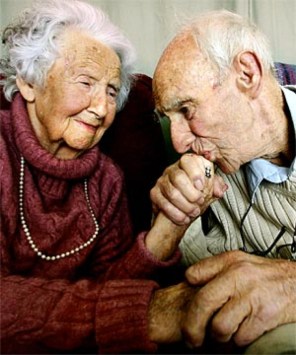 As we age, our sexual abilities, wants and desires change. However, these changes do nothing to our ability to be interesting, perhaps playful, to show interest, to initiate intimacy, to be clean, shaved and fresh, to put clean sheets on the bed, light a few candles, put on some music, etc. Sexual encounters, once a couple is empty nesters, are fairly simple to arrange, but sometimes difficult to execute in the conventional way, or ways. With young kids in the house, it takes real commitment to intimacy to find time—or even a place—to enjoy each other’s presence. There’s some frustration built into each scenario—having the ability and not the time, or having the time with diminished skills—but it remains important to keep fun and physical intimacy in your relationship, else couples risk ending up living together as brother and sister, polite and considerate with nothing resembling passion ar mutual engagement. This is NOT how to keep a marriage strong and healthy.
 As we have remarked often in this space, couples have a much better chance to make it to their golden anniversary—roughly 2-3% of married couples accomplish this—if they are friends as well as lovers. Friends don’t cash in their relationship because of a fight or disagreement. Friends tend to usually fight fairly with their friends; spouses perhaps not so much. John Gottman, in his book we have virtually worn the cover off of in this blog,










 Love's Sacred Embrace