The Four Major Hurdles to Marital Happiness, Part Two

Our previous post explored the challenges that children bring to a marriage, and some of the financial implications of living together as husband and wife.  This second piece focuses on two other subjects that married couples need to resolve lovingly, those being sex and the equitable sharing of household tasks.

About Sex

The Church’s teachings on sex and intimacy in marriage have evolved greatly over the past 25 years.  Historically, it was one of those things Catholics just didn’t talk about, as you could even get in trouble talking about it in some places, such as parochial schools.

Since the publication of Theology of the Body and the books that discuss it—The Good News About Sex and Marriage being first and foremost—there are many Catholic resources out there for couples seeking both physical and emotional intimacy in the marital bed. 
The Love’s Sacred Embrace retreats at Our Lady of Mt. Carmel are centered on Theology of the Body, on connecting the physical and spiritual aspects of our marriages with Christ’s marriage to His Church.  If we ignore the spiritual side of our marriage, it’s easy to get caught up in the secular elements—the ones that come at you in the hundreds—that put a serious strain on relationships.

There will be plenty more posts on the topic of sex within sacramental marriage.  For now, let us simply acknowledge that our physical relationship with our spouse is a gift from God, an integral part of sacramental marriage.  As Catholics, we are called to celebrate our marriages—to our spouse, and as part of the Body of Christ—fully in both their spiritual and human aspects.

Last word on this subject—it’s okay to have sex with your spouse.  In fact, it’s VERY okay.  It is a living re-presentation of your marriage vows.  And do you even KNOW what The Touch of Eden is?  You’ll have to attend a retreat at OLMC to find out! 

About the Division of Labor

The commentary on the Mass two weeks ago addressed an idea that has been floating around in my head for awhile, but one that I’ve never been able to adequately express.  It is the Servant-Leader, and its importance was immediately visible to me as regards marriage enrichment.

Clearly, the commentary was focused on Jesus as the ultimate Servant-Leader, the savior who came to earth not to be served, but to serve.  This model, of service to the ones we love, is a perfect template for bringing harmony to our marriages.

The Division of Labor argument typically finds both spouses feeling put upon and unappreciated for all they do, and usually provokes some form of hostility.  In the background of this argument is the suggestion that neither spouse wants to do a heckuva lot more than what they’re already doing to keep the wheels on.  It is this orientation, which is completely human and understandable, that must be re-examined in order for couples to escape repeated instances of this dispute.

As with most things Christian, the answer is paradoxical.  The answer is to seek opportunities to serve your spouse, above and beyond the call, so to speak.  Volunteer to take early duty with the kids on both Saturday and Sunday one weekend.  Play checkers with his dad while he goes to a pub on Sunday to watch the Colts.  Come home early and make dinner for her book club.

Jesus was the model of the Servant-Leader, and we as husbands and wives are called to serve one another.  The side effect, of course, is that both spouses are happier, and a cycle of service can help these small acts of service become a way of life.  One that works both ways.  Not-so-random acts of kindness that anticipate needs and are offered up without being asked.  Leaning into one another, in small ways, rather than leaning away.

For those with too much to do, the answer is to seek one’s partner, and volunteer to do more.  Negotiate where the time will come from.  Seek “Acknowledgement, Acceptance and Appreciation” for your efforts.  Enlist the help of The Holy Spirit.  Your spouse will usually reciprocate, and offer to help you in some way, almost always without being asked.  Repeat, and repeat again.  Release the power of your faith.  Give it up, and see if The Holy Spirit doesn’t lighten your load.

Summary

If you and your spouse are spending a great deal of your time arguing, it may be that you could benefit from some coaching in some common areas of discord. The marriage enrichment ministry at Our Lady of Mt. Carmel wishes to be a resource to help improve your marriage.  Our bi-annual retreats and monthly Marriage on Tap events are great places to meet other Catholic couples with similar concerns and an interest in creating an environment that supports marriage in our community.

* * * * *

If things in your marriage have moved too far along for the kind of informal support we provide in this ministry, we recommend you seek help from Third Option, a Catholic support group for marriages in trouble.

The Four Major Hurdles to Marital Happiness, Part One

For most couples married any length of time, it’s not unusual to have disagreements or fights.  We’ve been told and taught for centuries that God’s plan for humanity is that women and men will seek and find completeness in one another, that the various parts weren’t designed by accident, and so forth. Doesn’t mean we aren’t going to have fights.

Regardless of where you stand in this search, the fact that spouses fight is not terribly important.  HOW we fight IS important, and there are scores of books on that subject.  Suffice it to say for this moment that there IS such a thing as fighting fair, and that learning how is one of the important early lessons in young marriages.  Learning to avoid John Gottman’s Four Horses of the Apocalypse—criticism, contempt, defensiveness and stonewalling—is a good place to start.

My view, again, is that regardless of how frequently or how actively couples fight, they tend NOT to fight about a dozen different subjects.  They tend to have the same fight, again and again.  It may come in different disguises, with different backdrops, but it’s typically the same fight.  And, unless I miss my bet, the root cause falls into one of four categories:

Children

Money

Sex

Division of Labor 

These, I believe, are the big issues, the potential deal-breakers, the stumbling blocks that keep many couples from thriving through the difficult first decade of marriage and children.   Within sacramental marriage, then, how are we to deal with these issues in a successful way, i.e., one that keeps us connected spiritually, physically and emotionally with our spouse in a world that moves at light speed?

This post will focus on the first two.  The next post will look at the last two, and offer some final thoughts.

Children

The decision to have children is perhaps the largest question we as humans face as we enter adulthood.  Having kids changes everything, is twice as hard as you expect, twice as expensive, and infinitely more rewarding.  Until and unless a couple is on the same page concerning whether to have children, when, how many, etc., they are setting themselves up for difficulty down the road.  Couples who get married with the intention of finding common ground on this subject at some later date may find it impossible.  Too, the notion that having a child, or another child, is the prescription for a troubled marriage is bad reasoning.

Children will test your marriage in fairly direct proportion to their eventual number.  Couples determined to survive and enjoy these years will usually reap immeasurable rewards in their later years.  As my wife points out in the discussion over religious freedom and healthcare, being pregnant is not a disease.  But the commitment, in terms of things foregone, pleasures deferred, lifestyles altered, is critical.  We believe it is not our choice as to whether or when God chooses to bless our lives with children, but within sacramental marriage we hope that the husband and wife understand relevant scripture, as well as their own feelings on these issues, and respect the feelings of their spouse.

Money

Money has been called the root of all evil, and it is certainly at the heart of a lot of marital discord.  For many of us, money has become our god, and we consume ourselves in its pursuit.  Recognizing this in ourselves and agreeing on how to handle money before getting married will head off many troubles in the years afterward.  Not all, but many.

Nancy and I struggled financially for years, raising three children while I pursued what would kindly be characterized as a lackluster career.  I was on straight commission for 20 years, and my income, in addition to being insufficient, was unpredictable.  I put off Nancy’s entreaties to make and live on a budget literally for decades.  During those years, I wasted a lot of time worrying about money, and I expect someday to be held accountable for all of that wasted time.

OLMC offers several financial workshops, as well as a host of books on the topic in the church library.  If you and your spouse are arguing over money all the time, it couldn’t hurt to sign up for a workshop—together—and start working this thing out. Nancy and I have been on a fairly rigorous budget now for roughly three years, and it has improved our marriage.  The process of making the budget and then living (more or less) within it, for me, has been virtually painless.  And to think I resisted for 25 years.

One more thing about money.  Make sure there is a Charitable Giving line in your budget, and remember Jesus’ words in St. Matthew’s gospel about first fruits.

Next time, we’ll examine the topics of Sex and The Division of Labor.

Marriage: What’s God got to do with it?

Contributed by Christine Burrows.

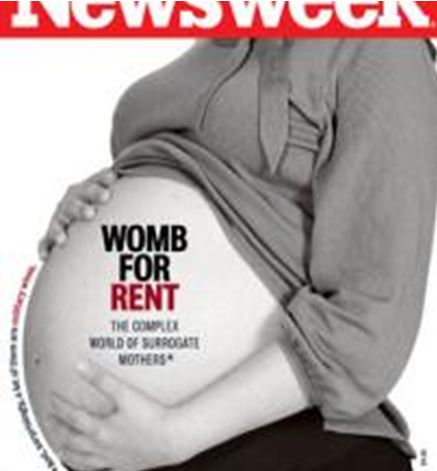
Last night Peter (husband) and I were flipping channels and landed on a sit-com called The New Normal.  We caught the last ten minutes of it which culminated in one of the lead characters (a male) proposing marriage to his (male) partner in a candlelit room while the surrogate mother carrying a child for them was hooked to a sonogram device – so that their baby could witness the engagement.

Before I comment further, let me say that watching this scene reminded me of a very real situation of a close college friend of mine. About eight years ago, her brother-in-law asked her husband to provide sperm so that he could become a father. The brother-in-law paid both an egg donor and a surrogate, and wanted to use his brother’s sperm so that he could make a child that was closely related to him through DNA. Since then, my friend’s brother-in-law has made four children, using his brother’s sperm and the sperm of his partner, donated eggs from different women, and rented wombs from other women.

Both of these situations – in TV Land and in the Real World – seem so far removed from what God had in mind for us in the sacrament of marriage. It saddens me to think of all the hoops people will jump through in their pursuit of the “right” to parenthood. It saddens me just as much when I think about how many other people are being used so that these men (but it could be anyone) can call themselves “married” and “parent”. Two thoughts on this:

  1. The gifts of our spouse and our children are truly gifts from God, and therefore holy. Holiness can’t be bought, designed, or manufactured. It has to be sought through relationship with God, and this requires submissiveness to God’s will. Homosexual partners who believe they want marriage can’t be fully submissive to God because their sexual union doesn’t have the capacity for life.
  2. When we forget about marriage and parenthood as reflections of God’s love, we think we can manipulate people and situations to earn titles and roles. While there may be love and good intentions at the heart of these pursuits, there is no submission to God’s will. And, I dare say, there’s no seeking holiness.

So that I don’t end on a soapbox, let me give a few shout-outs to some married holiness-seekers:

  • Let’s give it up to Sarah and Gary for submitting to God’s will to welcome another little Galvin to the world!
  • What about that McGonigal clan for generations of submission and holiness-seeking through marriage and family-building!
  • And to all that have answered the call to holiness through true, unselfish partnership in marriage, I pray for you because I know its sacrificial and difficult at times. Stay the course! It’s making God so happy and He’s got great things in store for you because you’ve answered His call.